
Table of Contents
ToggleThe best home sweet home ideas turn ordinary rooms into spaces that feel warm and welcoming. A house becomes a home when it reflects the people who live there. This article explores practical ways to create comfort, add personality, and build an atmosphere that says “home” the moment someone walks through the door. From decor choices to small daily rituals, these ideas help transform any living space into a place worth coming back to.
Key Takeaways
- The best home sweet home feeling comes from balancing comfort, familiarity, sensory appeal, and a sense of safety in your living space.
- Layer textures through throw blankets, pillows, and rugs to instantly warm up rooms and invite relaxation.
- Display personal collections, family heirlooms, and handmade items to transform generic spaces into meaningful environments.
- Use soft, distributed lighting from lamps and candles instead of harsh overhead lights to create a cozy atmosphere.
- Establish daily routines and use signature scents to build emotional connections that make your house truly feel like home.
- Reduce digital distractions and create phone-free zones to deepen your engagement with your physical space and the people in it.
What Makes a House Feel Like Home
A house provides shelter. A home provides belonging. The difference lies in emotional connection, comfort, and personal meaning.
Several elements contribute to that best home sweet home feeling:
- Comfort: Soft textures, comfortable furniture, and proper lighting make spaces feel inviting. People relax in rooms that physically support rest and ease.
- Familiarity: Objects with history, family photos, inherited furniture, or travel souvenirs, anchor a space to personal memory. These items tell stories without words.
- Sensory appeal: Pleasant scents, natural light, and background sounds (music, a crackling fire) engage the senses and create atmosphere.
- Safety: A home feels secure. This comes from both physical security and emotional comfort, knowing a space is yours to control.
Research from environmental psychology shows that people form attachments to spaces that reflect their identity. A living room filled with books signals something different than one centered on a gaming setup. Neither is better. Both express who lives there.
The best home sweet home environments balance function with feeling. A kitchen that works well and looks personal will always beat a showroom-perfect space that feels cold. Homes should serve the people in them, not the other way around.
Creative Home Sweet Home Decor Ideas
Good decor does double duty. It looks appealing and reinforces the feeling of home. Here are practical ideas that deliver both:
Wall Art and Displays
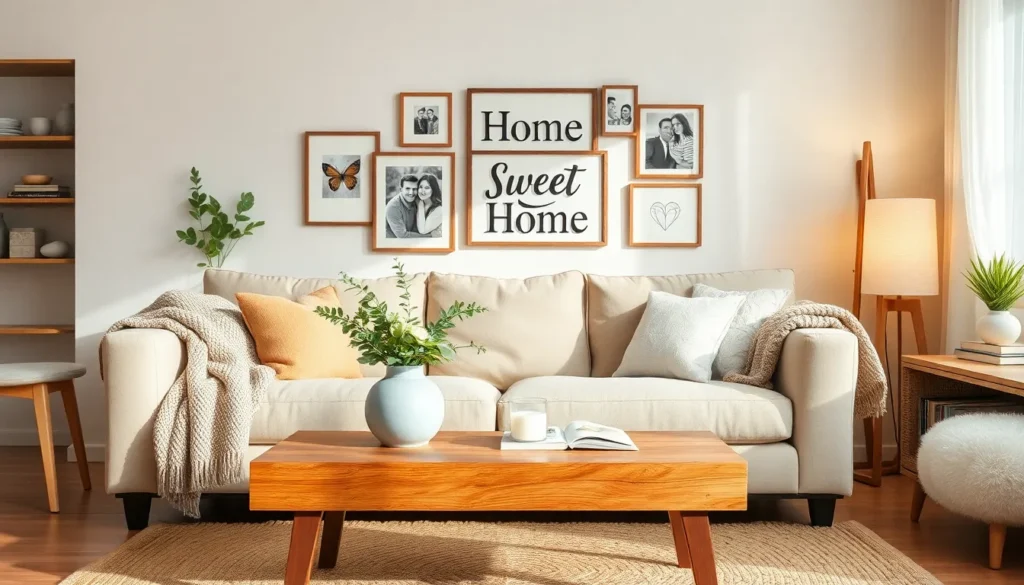
Gallery walls remain popular because they work. Mix framed photos, art prints, and small objects on a single wall for visual interest. The key is variety, different frame sizes, colors, and content create a collected-over-time look rather than a catalog feel.
“Home Sweet Home” signs and prints remain classics for good reason. They state the obvious in a way that feels genuine. Modern versions come in wood, metal, canvas, and neon. Choose materials that match existing decor.
Textiles and Soft Furnishings
Throw blankets, pillows, and rugs instantly warm up any room. Layer different textures, a chunky knit blanket over a leather couch, for example. These pieces invite touch and suggest comfort.
For the best home sweet home vibe, choose colors that feel personal rather than trendy. Neutral bases with pops of favorite colors tend to age well.
Lighting Choices
Overhead lighting rarely creates coziness. Table lamps, floor lamps, and string lights add warmth through softer, more distributed illumination. Dimmer switches give control over mood.
Candles deserve mention too. They add flickering light, pleasant scents, and a sense of ritual. Even battery-operated versions create ambiance without fire concerns.
Plants and Natural Elements
Living plants connect indoor spaces to the natural world. They add color, improve air quality, and require care, which itself builds attachment to a space. For those without green thumbs, high-quality faux plants or dried arrangements offer similar visual benefits.
Personalized Touches That Transform Your Living Space
Generic decor creates generic feelings. The best home sweet home spaces include items that could only belong to the people who live there.
Display Collections
Almost everyone collects something, books, records, vintage cameras, sports memorabilia, seashells from beach trips. Displaying collections shows personality and gives visitors conversation starters. Dedicated shelving or shadow boxes turn random items into intentional decor.
Incorporate Family History
Old photographs, heirloom furniture, or handmade items from relatives add depth to a home. A grandmother’s quilt on a bed or a great-uncle’s typewriter on a shelf connects past to present. These pieces carry meaning that new purchases can’t replicate.
Create Memory Walls
Dedicate space to documenting life events, vacations, milestones, everyday moments. Some families use cork boards for rotating displays. Others create permanent arrangements. Either approach works. The point is visual storytelling.
Add Handmade Elements
DIY projects, regardless of skill level, add authenticity. A painted canvas, a refinished piece of furniture, or a simple macramé plant hanger shows effort and personal investment. Imperfections often add charm rather than detract from it.
Name or Initial Displays
Personalized items, monogrammed towels, family name signs, initial artwork, literally put names on spaces. These work especially well in entryways, where they greet visitors with identity right away.
Simple Ways to Create a Welcoming Atmosphere
Atmosphere goes beyond objects. Daily habits and small choices contribute to the best home sweet home experience.
Establish Routines
Morning coffee in a favorite spot. Evening reading in a specific chair. Weekly family dinners at the table. Routines build associations between activities and spaces. Over time, these connections deepen attachment to home.
Maintain Cleanliness Without Obsession
Clean spaces feel better than cluttered ones. But lived-in homes shouldn’t look sterile. The goal is comfortable order, things generally in place, surfaces mostly clear, but evidence of life still visible. A stack of books on a nightstand or toys in a basket shows the space is used.
Control Temperature and Air Quality
Physical comfort matters. Homes that feel too hot, too cold, or stuffy struggle to feel welcoming. Good climate control, occasional window opening, and air purifiers where needed address this basic need.
Use Scent Intentionally
Smell triggers memory more directly than other senses. Consistent use of a signature scent, through candles, diffusers, or cleaning products, creates olfactory identity. Returning home to a familiar smell reinforces belonging.
Welcome Guests Properly
A welcoming home extends hospitality. Clear entryways, places for coats and bags, and comfortable seating areas for visitors show that others are valued. The best home sweet home environments make both residents and guests feel at ease.
Reduce Digital Distractions
Spaces dominated by screens often feel less homey. Designating phone-free zones or screen-free times allows deeper engagement with physical surroundings and other people. Connection to place grows when attention stays present.